


1.9 miles
Bridge Length Monitored
2.5 years
Monitoring Duration
140+
Instruments Installed
0
Structural Impacts
The Challenge
Building Beside a Living Bridge
36-inch square prestressed concrete pile driving within 35 feet of existing foundations
Embarkment fills up to 30 feet adjacent to bridge substructures
Soft Coastal Plain soils susceptible to lateral displacement and vibration transmission
Continuous public traffic throughout construction
Real-time verification was required to ensure that adjacent construction activities did not compromise the structural integrity of the existing bridge.

FTG's Approach
A Comprehensive Multi-Instrument Program
FTG designed and executed a comprehensive, multi-instrument geotechnical monitoring program spanning the full 1.9-mile corridor, with redundant instrumentation at every critical location.
Automated Total Stations
Monitoring 122 structural prisms across the full corridor
Tilt & Strain Sensors
Installed on critical bridge elements for rotation and stress monitoring
Triaxial Vibration Sensors
Deployed during all pile driving operations near existing foundations
Inclinometers & Settlement
Subsurface movement tracking through soft Coastal Plain soils
Services Provided
Pre-Construction Baseline
Established structural baseline across all 140+ instruments before any construction activity.
Continuous Real-Time Monitoring
Around-the-clock automated data collection throughout the 2.5-year construction window.
Alert Threshold Management
Tiered alert levels with automated notifications to project stakeholders.
Immediate Engineering Analysis
Real-time cross-analysis of instrument data during critical construction events.
Critical Risk Event
Unexpected Lateral Displacement — Virginia Abutment
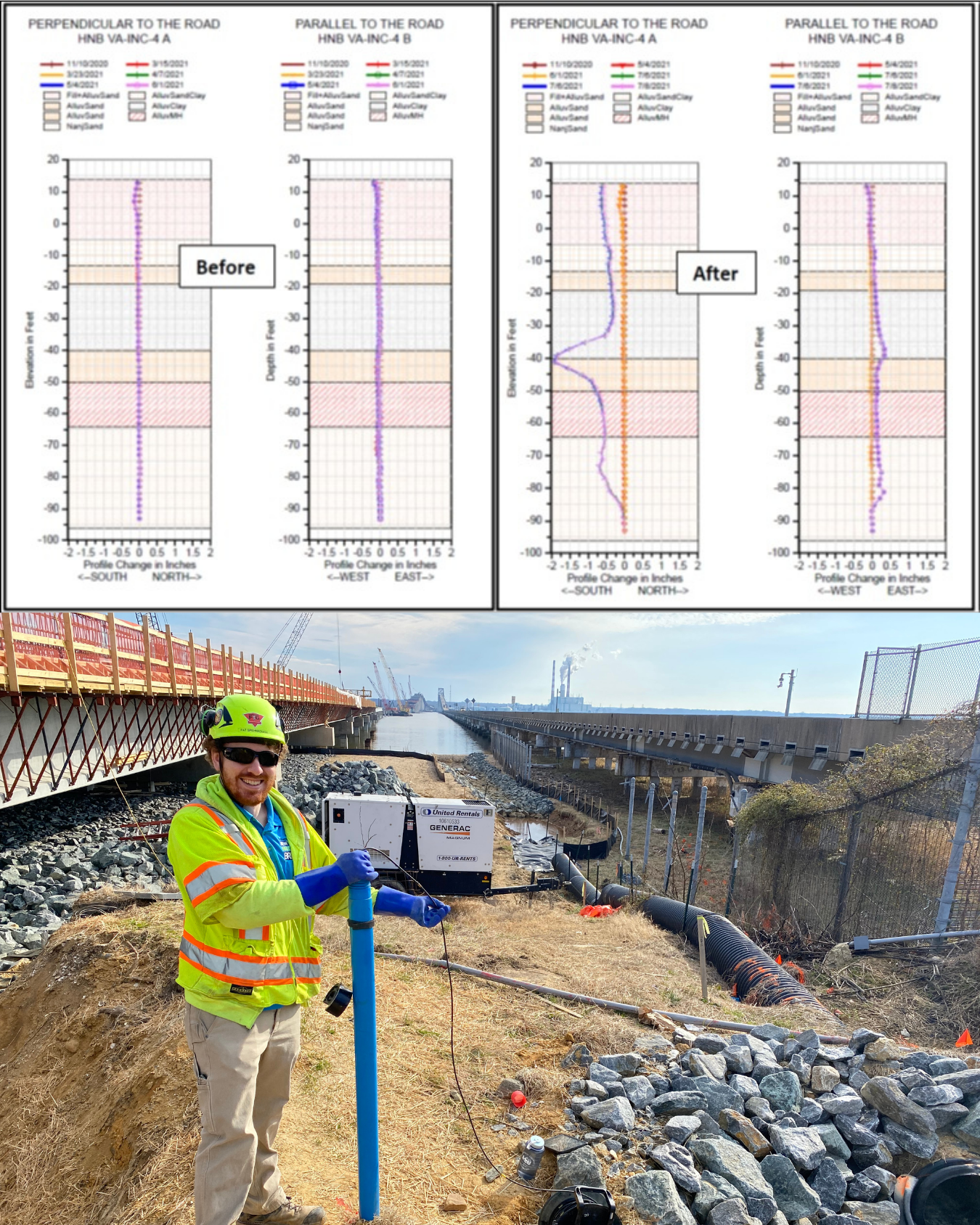
During pile driving near the Virginia abutment, lateral soil displacement exceeded initial projections.
FTG performed immediate cross-analysis of inclinometer, prism, tilt, and vibration data to verify structural tolerances in real time.
Instrumentation confirmed no settlement, rotation, or structural distress had occurred — allowing the project to continue without interruption.
Construction proceeded safely without interruption.
Demolition Monitoring
Monitoring Through Controlled Demolition
During controlled blasting of the existing bridge, FTG conducted vibration monitoring of the newly constructed bridge to verify structural response remained within established limits.
Instrumentation confirmed no adverse structural effects to adjacent structures during demolition operations.
Structural Response Within Limits
RESULTS
2.5 Years. Zero Compromises.
No vibration thresholds exceeded due to adjacent construction or demolition activities
No settlement or structural rotation beyond tolerance at any monitored pier
No long-term structural impact identified across the 1.9-mile corridor
Existing bridge remained fully operational throughout the entire project
Project delivered on schedule with no construction stoppages
New bridge opened Fall 2022 with a 100+ year design life
The new Harry Nice Bridge opened to traffic Fall 2022 — on schedule, on budget, and with zero structural incidents on the existing bridge during construction.
