


920 ft
Feet of Planned Excavation
±0.06 in.
Baseline TMP fluctuation
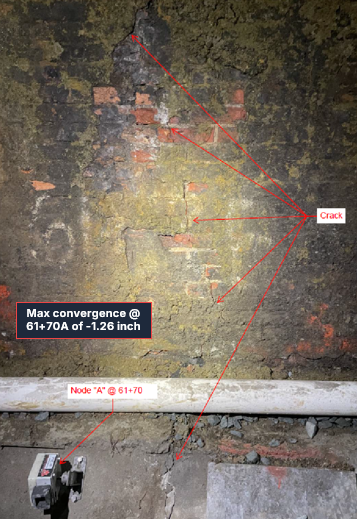
-1.26 in.
Maximum Recorded Convergence
<24 hrs.
Enhanced Monitoring Installed
The Challenge
Monitoring an Existing Tunnel During Active Excavation
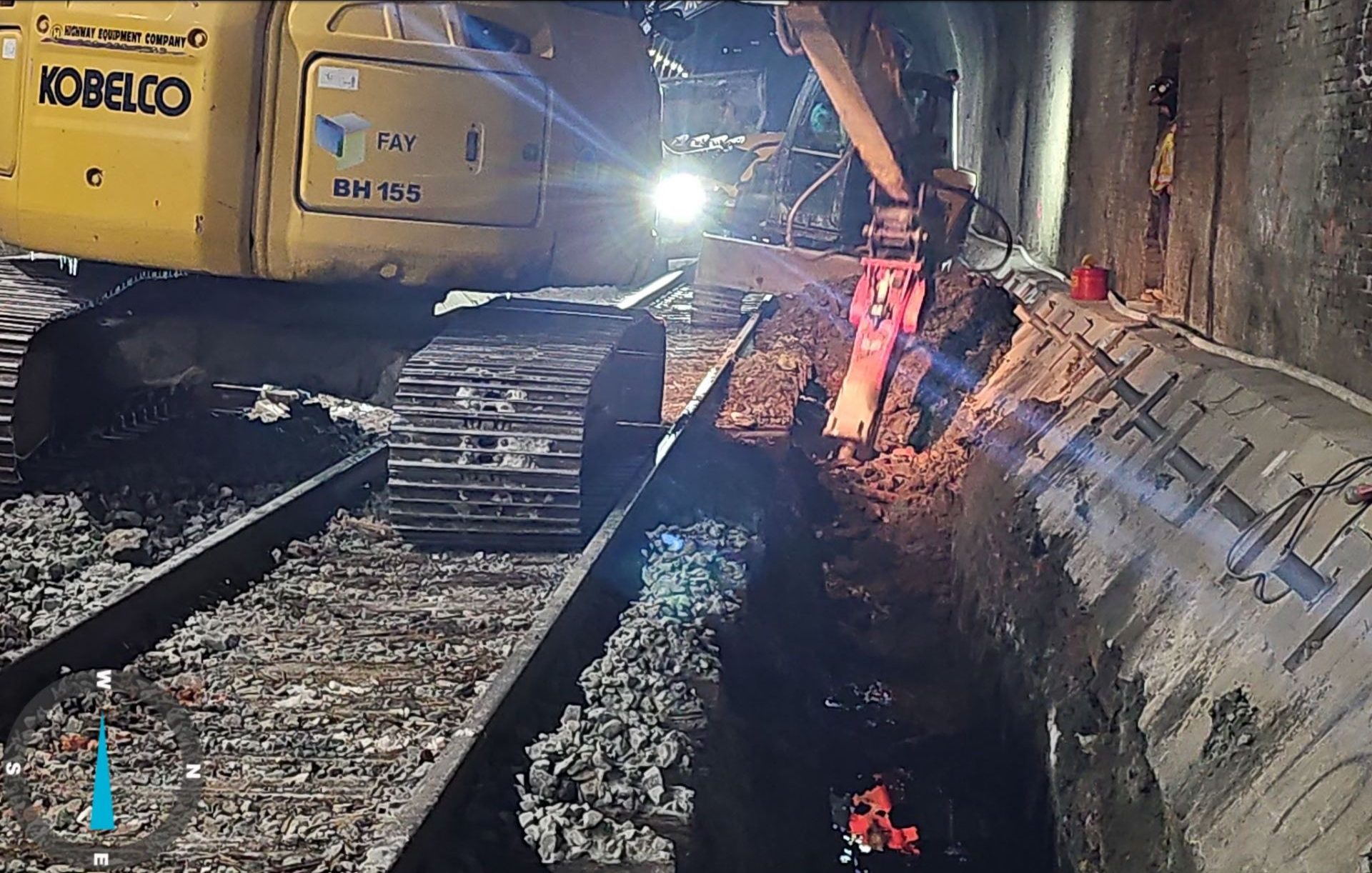
Active excavation progressed along both the north and south sides of the existing tunnel.
Tunnel convergence needed to be monitored as excavation approached and progressed through the area.
Movement increased significantly as excavation advanced beyond Station 61+93.
When conditions changed, the monitoring data provided the project team with visibility into the magnitude and progression of tunnel movement.
FTG'S SERVICE APPROACH
Continuous Monitoring for Changing Conditions
FTG provided Tunnel Monitoring Point arrays to track changes in tunnel wall convergence throughout excavation. As movement increased, the monitoring program was enhanced with an Automated Total Station to provide additional visibility into the area of concern.
Geotechnical Instrumentation & Monitoring
FTG provided Tunnel Monitoring Point arrays to monitor changes in tunnel wall convergence during excavation.
Automated Monitoring
Automated monitoring tracked tunnel movement and provided data as excavation progressed.
Automated Total Station
When movement was detected within a zone of interest, FTG added an Automated Total Station and prisms to enhance monitoring of the affected area. The system progressed from design, proposal and approval to installation in less than 24 hours.
Construction Monitoring
FTG continued monitoring through excavation, site quarantine, remediation and excavation restart.
Tracking Tunnel Movement Through Remediation
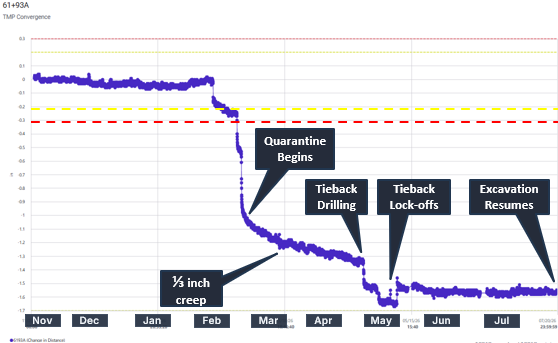
Annotated monitoring data shows the relationship between tunnel convergence, construction activity and the project's response.
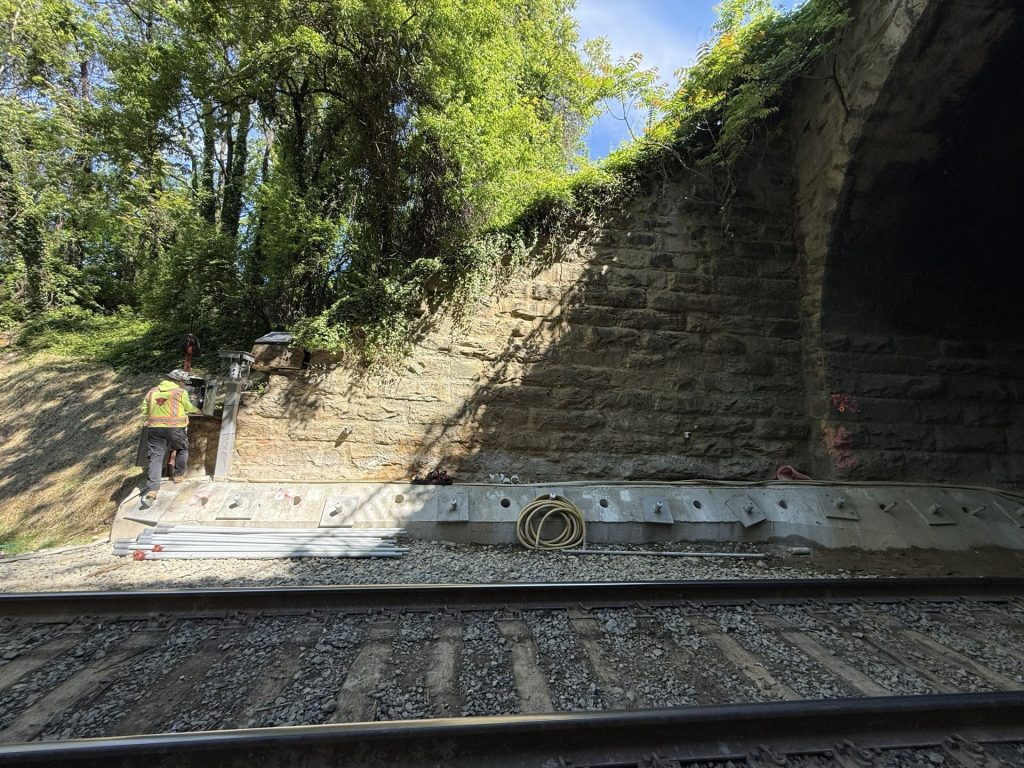
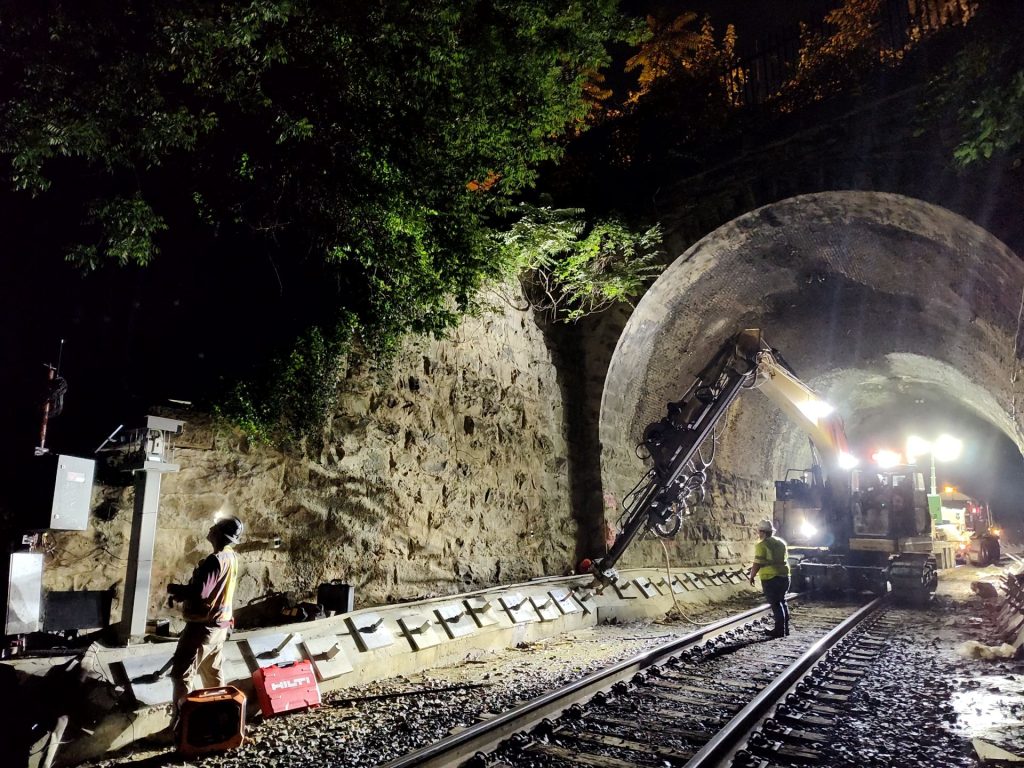
New tiebacks installed during tunnel remediation.
The Monitoring Identified a Change
Excavation-related movement increased beyond established monitoring levels.
Maximum convergence reached -1.26 inches at Station 61+70A.
Initial excavation produced relatively stable TMP readings, with baseline fluctuations of approximately ±0.06 inches. As excavation approached Station 61+93, a Review Level of -0.2 inches was triggered. Further excavation on February 24 triggered an Alert Level of –0.3 inches and reached a total convergence of -0.51-inch, followed by additional excavation on February 26 that reached 1.0 inch of total convergence at Station 61+70. Excavation operations were shut down February 28 as the project team evaluated changing tunnel conditions.
Increased clay content in excavated soils was observed below (down-station) from station 63+00.
From Detection to Response
Monitoring continued as the project moved through evaluation, remediation and excavation restart.
Following the excavation shutdown, the project entered a site quarantine while conditions were evaluated. Additional tiebacks were installed between Stations 60+00 and 63+00, increasing tieback frequency from every 5 ft to every 2.5 ft. An Automated Total Station was also added to enhance monitoring.
Monitoring Supported Informed Decision-Making
Results
Excavation resumed following remediation and continued monitoring.
Excavation resumed July 20 following the remediation period.
Excavation was completed between July 20 and August 5.
Monitoring Program was completed on August 12.
Survey prism data documented conditions during the excavation completion period.
Monitoring provided continuous visibility into changing tunnel conditions throughout the response and construction restart.
When excavation conditions changed, FTG's monitoring program provided the data needed to understand movement, support the response and continue monitoring through construction restart.
